
Preparing for Fall Planting with Arnold's Prairie Greenhouse & More
Excerpt from The Coffey Break Summer 2026 Edition
Written by Laura Pavlak
Fall is an excellent time to plant many things! The heat of summer should be over, and while the days begin to cool down, the soil is still warm and there is less competition from weeds in the fall versus the spring. Fall is THE time to plant many bulbs and tubers, including the spring-blooming bulbs such as tulips, daffodils, hyacinths and crocus, and root/rhizome perennials such as iris and peonies. Many other perennials can also be successfully planted in the fall (hostas, daylilies, lilies) from root divisions, and most anything growing in a container can be planted in the fall.
Bearded Iris are typically dug and divided in the summer (July-Aug), so plan on late summer/early fall (Aug-Sept) planting of those. The general time-frame for planting bareroot peonies is late September through early November.
With your fall plantings, you want to plant early enough so that the roots can get established before winter sets in. September-October is the ideal time frame for most of your fall bulb/tuber plantings. Did you know - mid to late October is the time to plant garlic in Kansas?! You can also plant onions in the fall.
Consult with your local garden center/nursery and reputable resources such as K-State Extension for specific details on site selection and preparation. Getting a good soil test done is always a good idea, so you know what you’re starting with. That’s a good heat-of-the-summer project, so you know what soil amendments and fertilizers you’ll need before planting time. Generally speaking, we have a lot of heavy clay soil around here, so adding organic matter in the form of compost and/or well-aged manure is almost always recommended, unless you’ve already been improving your soil. Good soil drainage is another important consideration. If you’re dealing with a lot of clay in your soil, consider building up berms (gentle mounds) with good topsoil and organic matter to improve the drainage for your plants.
You may have heard that bone meal is recommended as a fertilizer to plant with bulbs. This is because it’s a natural, organic, slow-release source of phosphorus and calcium, which promotes strong root development. While this is true, a few words of caution - many soils already have sufficient phosphorus (especially home gardens where fertilizer has already been used), and bone meal can attract rodents and carnivores. So, back to that soil test we mentioned - find out what you really need fertilizer-wise first!
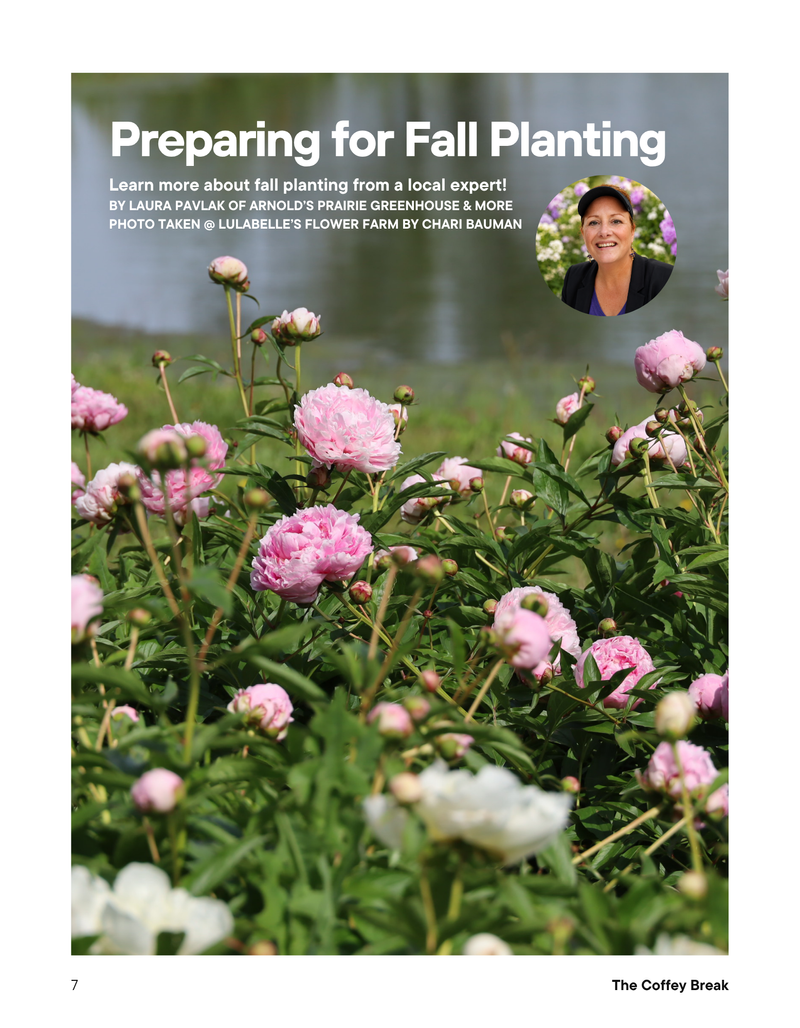
Stumped on what to plant? Daffodils (narcissus) are a great choice for beginning gardeners and pros alike. They are low-maintenance and rarely bothered by critters. After they bloom in the spring, you need to let the leaves grow and then die down naturally - the bulb is replenishing for the next growing season through this process. As the yellowing foliage can be unsightly, consider inter-planting with some “summer” perennials such as hosta, lamb’s ear, daylilies or penstemon that will start growing and cover up the dying daffodil leaves. Bearded iris are another excellent choice - just don’t plant them too deep - the rhizomes should be partially exposed. Peonies are also a super choice - despite their beautiful and fragrant, delicate-looking flowers, they are tough plants that don’t require much once they’re established.
Arnold’s Prairie is planning to add a selection of bearded iris for fall planting this year, and as always, will have peony roots and a great selection of bulbs from the Netherland Bulb Company. This will include allium (ornamental onion), crocus, hyacinths, daffodils, tulips and yes - garlic! Let us know if there are specific colors or varieties of fall-planted bulbs you’re interested in, and we’ll see if we can get them for you.
Coffey County Chamber of Commerce
305 Neosho St, Suite A,
Burlington, KS 66839
620-490-0701
www.coffeycochamber.com