
Chinuk Wawa: the trade language of the Pacific Northwest
The Museum of Natural and Cultural History in Eugene is featuring Chinuk Wawa as part of its latest exhibit.
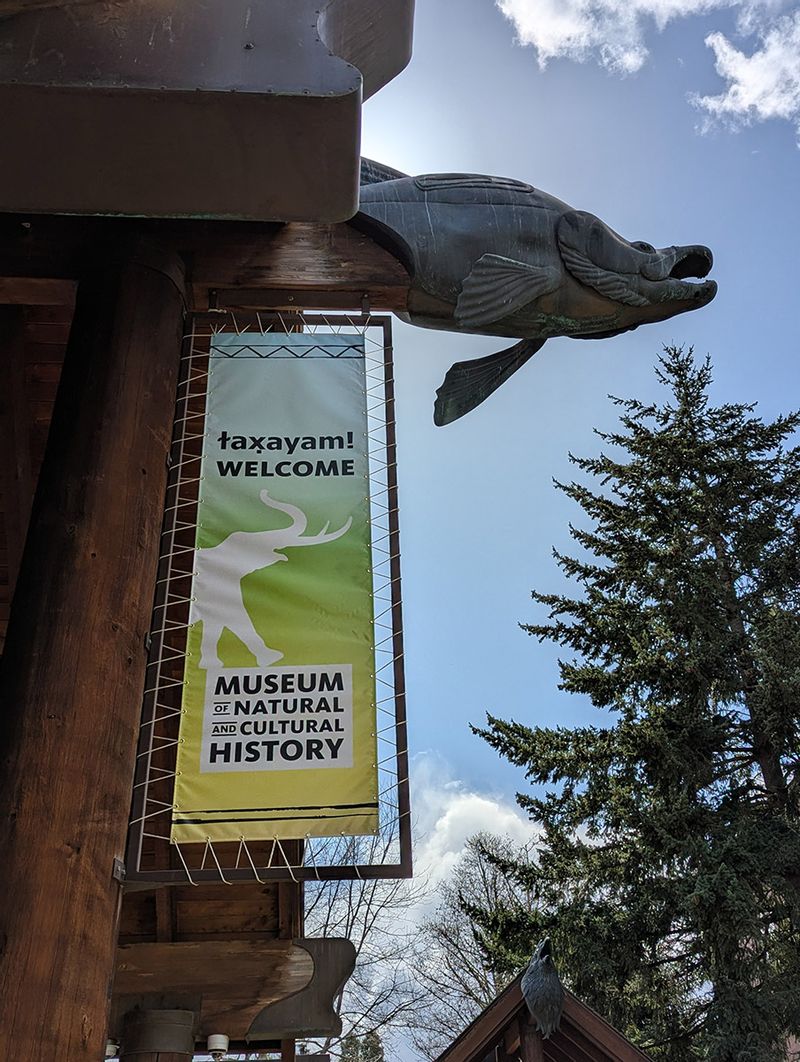
Imagine life in the Pacific Northwest 200 years ago. Indigenous people in the early 1800s were connected by vast trade networks to people all over the region. They traveled by boat and foot to trade hubs in the Willamette Valley, the Columbia River, and north to what is now Washington and Canada.
Just like today, people living in different places speak different languages, and need to come up with shared ways to talk to each other. To communicate with people from other Tribes, many people also spoke Chinuk Wawa, an intertribal trade language. Chinuk Wawa is most similar to Chinookan, the language of the Chinook Tribe. It also includes vocabulary, phrases, and language structures from other Indigenous languages, as well as English and French. When European traders and settlers arrived, they also learned and used Chinuk Wawa to talk with Indigenous people in the Pacific Northwest. Learning this language would allow you to talk with people from hundreds of miles away, even if you had nothing else in common.
Do you want to learn more about Chinuk Wawa? Due to suppression of Indigenous culture, Chinuk Wawa was at risk of disappearing during the twentieth century. Recently, Native people have been working to revitalize the language. The Museum of Natural and Cultural History’s latest exhibit, America at 250: Before, Between, Beyond is presented in English, Spanish, and Chinuk Wawa, translated by speakers of each of those languages. You can even take Chinuk Wawa as a class at Lane Community College!